

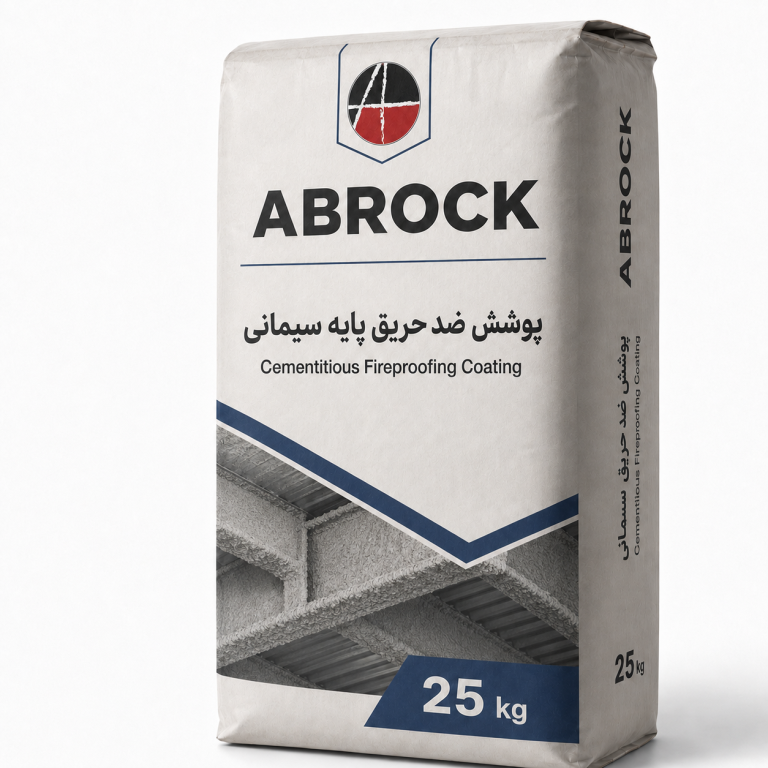
A mineral, cement-based passive fire protection system that slows heat transfer to structural steel and helps maintain load-bearing stability during a fire.
Description
Cementitious Fireproofing for Steel Structures
Abrock Poshesh Cementitious Fireproofing is an inorganic, mineral-based mortar applied to steel sections to reduce the rate of heat transfer during a fire. By delaying the temperature rise of beams, columns and braces, the system helps structural steel retain its strength and stability for the specified fire-resistance period.
Composition and performance
The system is based on cementitious binders, heat-resistant mineral components, lightweight aggregates, reinforcing fibers and additives selected to support adhesion and application performance. The exact formulation and approved performance depend on the product grade and project specification.
Key benefits
- Passive fire protection without active operation
- Inorganic mineral composition
- Reduced rate of steel temperature rise
- Spray application suitable for large structural areas
- Applicable to beams, columns, braces and complex steel profiles
- Economical solution for many large building and industrial projects
Typical applications
- High-rise and commercial buildings
- Hospitals, schools and hotels
- Parking structures and assembly buildings
- Factories, power facilities and infrastructure projects
- Critical public and service buildings
Thickness design
Fireproofing thickness is not a single fixed value. It must be calculated from the required fire-resistance period, steel section factor, design fire exposure, critical steel temperature, environmental conditions and the approved performance data for the selected system.
Application process
- Inspect and prepare the steel surface.
- Confirm primer and substrate compatibility.
- Mix the material according to technical instructions.
- Apply using suitable spraying equipment.
- Measure and correct the applied thickness.
- Complete curing, final inspection and quality records.
Material selection, design and installation should be coordinated with the fire-protection specification and applicable project approvals.



No comments yet.